
How Multi-Camera Recording Works for UAE Exhibition Stands
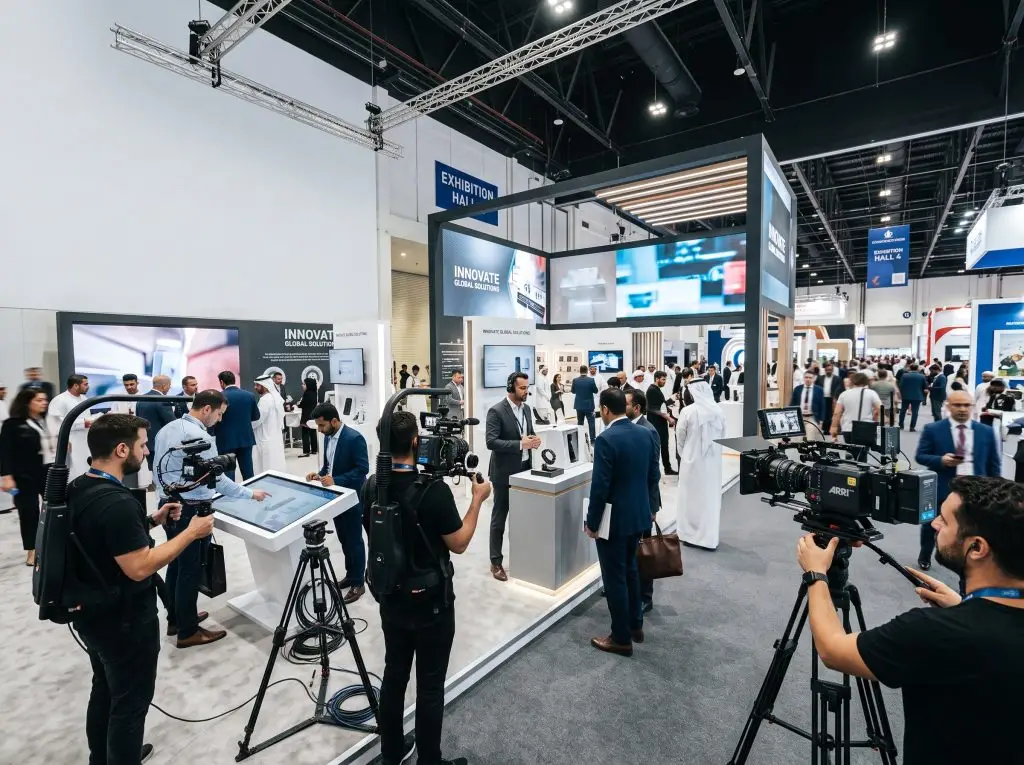
Exhibition stands are busy, unpredictable, and full of moments that happen at the exact same time. A product demo runs on one side of the booth while a sales conversation unfolds on the other, and a visitor stops to record something on their phone right as your team unveils a new feature. Capturing all of that with a single camera is nearly impossible, which is why multi-camera video production has become the standard approach for brands exhibiting across Dubai, Abu Dhabi, and the wider UAE.
If you have ever walked past a booth at GITEX, Arabian Travel Market, or a Dubai World Trade Centre exhibition and noticed a small production crew moving between angles, you were watching this process in action. It is not just about looking polished for the day, it is about building content your marketing team can use for months. The same planning mindset applies across event formats, including smaller touches like setting up a live photo booth, where power, placement, and timing all need to be worked out before doors open.
This blog breaks down exactly how the process works, from planning camera positions to the editing decisions that turn raw footage into something your marketing team actually wants to post.
Table of Contents
Toggle
Why Exhibition Stands Demand More Than One Camera Angle
A trade show floor is not a controlled studio environment. Lighting changes depending on where your stand sits in the hall, foot traffic is unpredictable, and your best moments rarely happen on cue. A single fixed camera might catch a great product reveal but completely miss the visitor reaction that made it memorable.
Multiple synchronized cameras solve this by covering different zones of the booth at once: a wide shot for context, a tighter shot on the presenter or product, and a third angle on visitor interaction or a demo station. When these feeds are combined in editing, the final video feels dynamic rather than static, closer to how a visitor actually experienced the stand rather than a flat recording of one corner of it.
Planning Camera Placement and Keeping Every Feed in Sync
Good coverage is decided before the exhibition even starts, not improvised on the day. A production team typically walks the stand layout in advance, whether that’s a full architectural plan or a site visit the night before doors open, to identify where key activity will happen: the main presentation area, the reception desk, product displays, and any interactive zones. Camera positions are then chosen to avoid crossing lines, keep sightlines clear of pillars or neighboring booths, and make sure at least one angle always has a clean shot of the brand signage. The same logic applies to multi-camera setups for corporate event coverage, where predictable session formats make advance positioning even more important.
Once recording starts, the challenge shifts to synchronization. If cameras are not aligned on timecode or a shared reference point, editing becomes a slow process of manually lining up footage frame by frame, and small timing mismatches can make the final cut feel disjointed. Professional setups solve this using timecode generators or a clapperboard-style sync reference at the start of recording, so every camera’s footage lines up automatically in post-production, one of the less visible steps that separates a smooth highlight reel from something that feels stitched together.
Capturing Genuine Visitor Engagement, Not Just the Stand
The most valuable footage from an exhibition rarely comes from the stand itself, it comes from how people react to it. A visitor leaning in to try a product, a genuine laugh during a demo, or a crowd gathering during a launch moment tells a far more convincing story than a static shot of your signage.
This is where having a dedicated camera operator focused purely on candid, reactive coverage pays off. While one camera stays locked on the presenter, another follows the room, watching for these unscripted moments that end up becoming the most-shared clips once the event footage is edited.
Managing Audio in a Loud, Crowded Hall
Exhibition halls are loud. Neighboring stands run their own announcements, background music plays over the PA system, and hundreds of conversations happen simultaneously. Video that looks great but sounds muddy undermines the whole recording, especially for product demos or spoken presentations where clarity matters.
Getting clean audio in this environment usually means wireless lavalier microphones on presenters, a boom mic for close interactions, and a backup recorder running independently of the camera in case of interference. Audio is mixed separately from the video edit afterward, which is why the finished product sounds far clearer than what anyone standing on the floor actually heard.
Streaming Exhibition Moments to Audiences Who Could Not Attend
Not every stakeholder can be on the exhibition floor. Regional offices, investors, or a global audience following your brand online often want to see key moments as they happen rather than waiting weeks for an edited recap. This is where live streaming coverage becomes a natural extension of a multi-camera setup, feeding the same synchronized angles into a live switch that broadcasts in real time.
The advantage of doing this alongside recorded coverage is that you get both outcomes from one production: a live feed for immediate reach, and full-quality footage still being captured in parallel for later editing. Getting this balance right comes down to how live camera switching works, since nothing about the live element should compromise the archival recording.
Turning Raw Footage Into Usable Marketing Assets
Once the exhibition wraps, the real work of shaping the story begins. Editors work through hours of multi-angle footage to build a highlight reel, shorter social clips, and sometimes a longer recap video for internal reporting or investor updates. This is also the stage where teams look at ways to repurpose multi-camera event footage across different formats and platforms, so a single shoot keeps delivering content long after the event ends. Color grading brings consistency across shots taken in different lighting conditions, and audio is leveled so a quiet product demo does not sound jarring next to a loud stage announcement.
This stage is also where interactive elements captured during the event, like a 360-degree video booth experience, get folded into the broader content package alongside the main multi-camera footage, giving marketing teams several formats to work with from a single event.
Choosing a Production Team That Understands Exhibition Environments
Not every videographer is set up for the pace of an exhibition floor. It requires a crew comfortable working around crowds, adapting to venue restrictions, and making fast decisions when a moment happens without warning. Teams that regularly cover corporate event photography services tend to bring a workflow that has already been tested across dozens of similar environments, from GITEX-scale conferences to smaller industry showcases.
Dubai Fotographer has worked across UAE exhibition halls long enough to know where the recurring challenges sit, from tight booth spacing to hall lighting that shifts throughout the day, and builds camera plans around those realities rather than treating every stand the same way. Businesses exploring options for an upcoming show can see the full range of coverage on the Dubai Fotographer website before planning their production.
Final Thoughts
Multi-camera recording for exhibition stands is less about having more equipment and more about having a plan. Camera placement, synchronization, audio management, and thoughtful editing all work together to turn a few chaotic days on a trade show floor into content that keeps working for your brand long after the hall lights go off. Whether the priority is a highlight reel for social media, a recap for investors, or live coverage for a remote audience, the process comes down to capturing the right angles at the right moments and giving them a coherent structure afterward.
Frequently Asked Questions
1. How many cameras are typically used for an exhibition stand recording?
Most exhibition stands use two to four synchronized cameras, depending on booth size and how many activity zones need coverage.
2. Can multi-camera footage be turned into short social media clips?
Yes, editors commonly cut a single multi-camera shoot into several shorter clips optimized for platforms like Instagram and LinkedIn.
3. Does multi-camera recording disrupt the exhibition or visitor flow?
No, cameras are positioned and cabled in advance so operators can move freely without blocking walkways or visitor access.
4. Is live streaming possible alongside recorded footage?
Yes, a live feed can be produced from the same camera setup while full-quality footage is still captured for later editing.
5. How long does it take to receive edited footage after the exhibition ends?
Turnaround varies by scope, but a short highlight reel is often ready within a few days, with fuller edits following shortly after.